Lighting for video calls and reels: where the light goes matters more than how strong it is
11 October 2026
Most bad video is not under-lit — it is lit from the wrong place. Three common mistakes and how to fix them in a minute.
People buy a stronger light when the problem is direction, not power. Most of what ruins a call or a clip is fixed by moving something, not by buying it.
Mistake one: the window behind you A camera sets itself to the brightest thing in the frame. With a window behind you, it sets itself to the window and you become a silhouette. The fix is not a stronger light — it is turning around. Put the window in front of you, with the camera between.
Mistake two: light from above Ceiling light falls straight down and makes shadows under the eyes and nose. That is the real reason evening calls look tired. Any light at roughly face height removes it at once.
Mistake three: two lights, two colours A warm yellow lamp on one side and a white daylight light on the other gives you a face that is half orange and half blue, and the camera cannot correct both at once. Switch one off. That alone fixes more than you would expect.
Where the light goes
- In front of the face, not to the side and not above
- Slightly higher than eye level, angled gently down
- About an arm's length away — too close makes a bright patch, too far does nothing
And why colour temperature matters
A bi-colour light runs from warm through to daylight. The point is not prettiness: match it to the room. A yellow-lit room with a bright white panel gives a blue face against an orange background. Matching the colour matters more than brightness.
Brightness: less than you think The first thing people do is turn it all the way up. The result is a flat face with no features and narrowed eyes. Start in the middle and raise it only until the shadows go.
For reels specifically
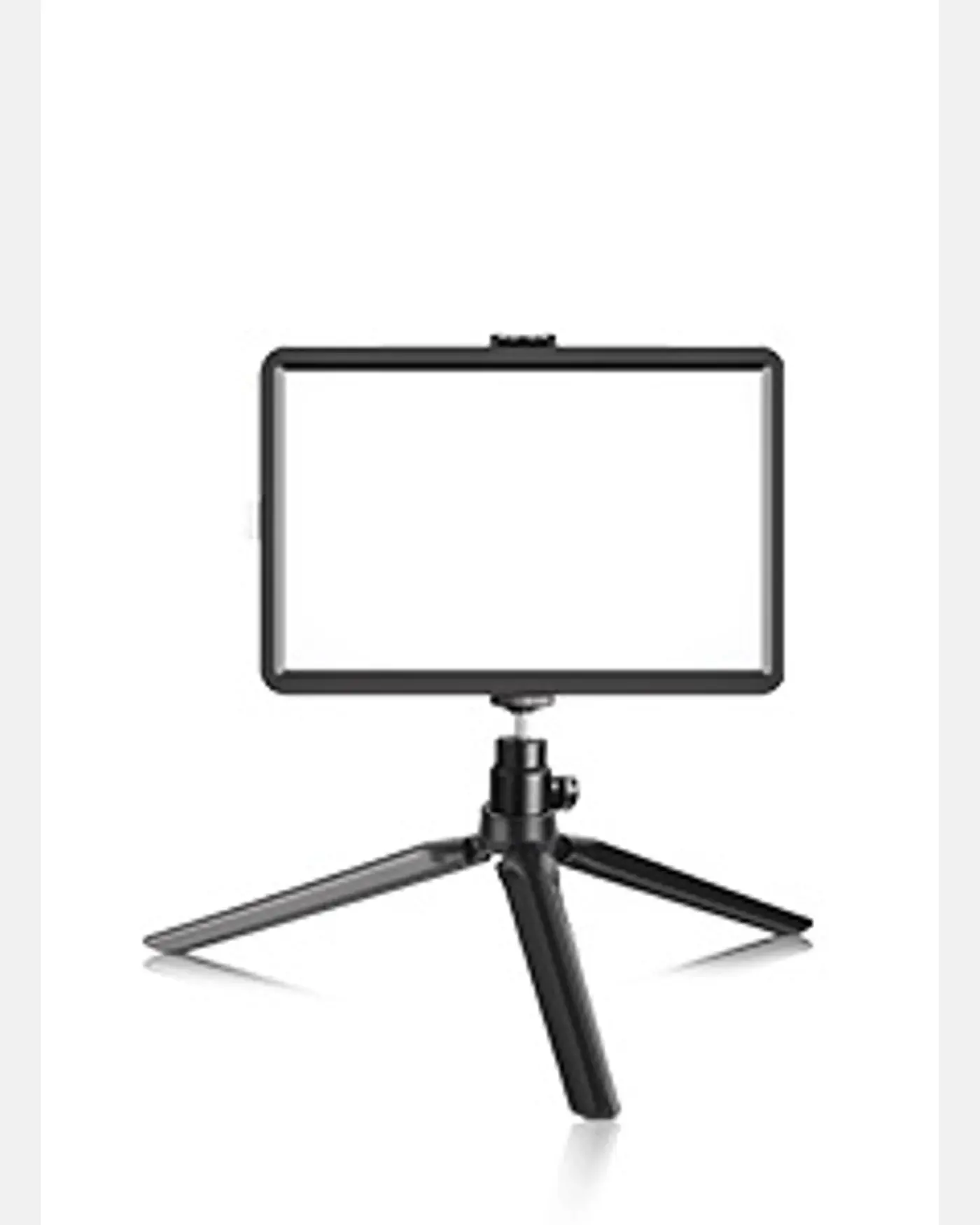
Vertical video sits closer to the face, so lighting faults are more obvious. And if you move in the clip, a panel fixed on a tripod beats anything handheld — light that moves with a hand makes the whole shot wobble.
A plain background does half the work
A plain wall, one light in front, camera at eye height. That is a setup that needs nothing more, and it is what separates a clip that looks considered from one that does not.
Common questions
- Why do I look dark on video calls?
- Usually because the brightest thing in the frame is behind you — a window or a lamp. The camera sets itself to that and you become a silhouette. Put the window or the light in front of you.
- Where should I put the light for filming?
- In front of the face, slightly above eye level and angled gently down, about an arm's length away. Light from above makes shadows under the eyes; from the side it splits the face.
- What is the point of a bi-colour light?
- It lets you match the light to the room. A bright white panel in a yellow-lit room gives a blue face on an orange background, and a camera cannot correct two colours at once.