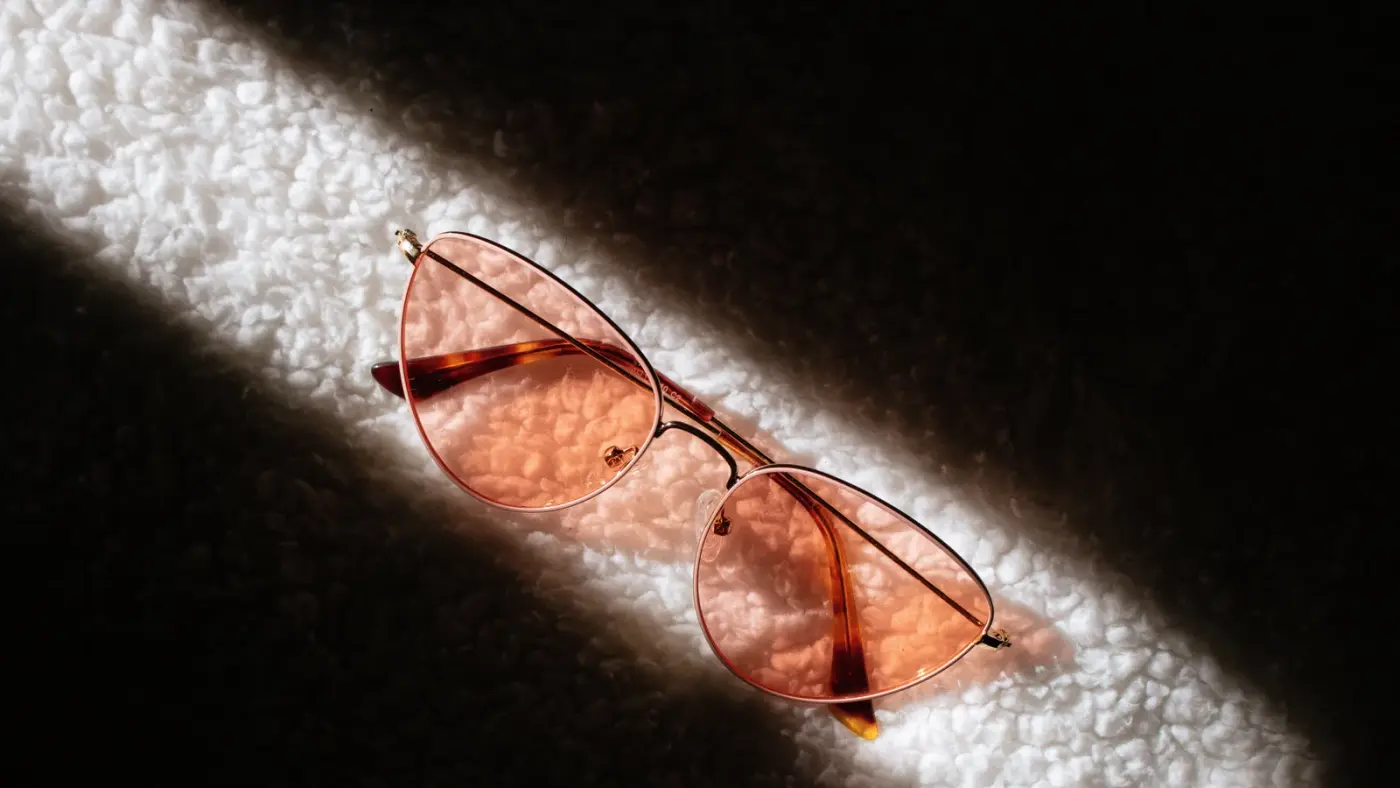
A dark lens is not protection — how to tell if your sunglasses actually work
23 September 2026
A dark lens with no UV protection is worse than no sunglasses at all, and the reason is your pupil. What has to be stated, and why polarised differs.
The most misunderstood thing about sunglasses is simple: the colour of the lens tells you nothing about the protection.
Why a dark lens with no protection is worse than none
In bright light your pupil narrows on its own to limit what gets in. Put a dark lens in front of it and the scene dims, so the pupil opens again — and if that lens does not block ultraviolet, you have just held the door open for it. An unprotected eye defends itself. An eye behind a cheap dark lens does not.
What has to be stated
Look for ultraviolet protection said out loud. The usual wording: UV protection, UV400, or blocks 100% of UVA and UVB. If none of that is stated, do not assume it. Price, brand and darkness tell you nothing about this.
Polarised is a different thing
Polarising does not protect against ultraviolet. It cuts the glare bouncing off tarmac, car glass and shiny surfaces. It is comfort and clarity, not safety. Plenty of sunglasses do both, but they are not the same thing, and a seller who answers "they are polarised" when you asked about protection has not answered you.
In Saudi specifically
The sun here is high for most of the day, so the light arrives from above before it arrives from in front — which makes coverage at the top of the frame matter, not just width. And the glare thrown back off hot tarmac and pale sand is harsher than it looks; on a long drive that is what tires your eyes, more than the sun itself.
And in the car?
A windscreen blocks most UVB, side glass is less reliable, and the glare is unchanged either way. Sunglasses while driving are not a luxury, and a polarised lens makes a real difference on a long road.
About ours
The round metal pair states both: polarised lenses, and ultraviolet protection. We do not quote a category number, because the supplier did not give one — and we are not going to invent a number on something worn in front of the sun.
Care
Wipe the lenses with a soft dry cloth, and do not leave them in a parked car in the sun. Heat separates lens coatings and warps frames, and that is what ends most sunglasses long before anything breaks.
Common questions
- Does a dark lens mean sun protection?
- No. The tint has nothing to do with protection. A dark lens with no UV protection is actually worse than no sunglasses, because your pupil opens in the dimness and lets more ultraviolet in.
- What is the difference between polarised and UV protection?
- Polarising cuts glare reflected off tarmac and glass — that is comfort and clarity. UV protection guards the eye itself. Many sunglasses do both, but they are separate things and each should be stated.
- Do I need sunglasses while driving?
- Yes. A windscreen blocks most UVB but side glass is less reliable, and the glare off hot tarmac is unchanged — that glare is a main cause of eye fatigue on long drives.